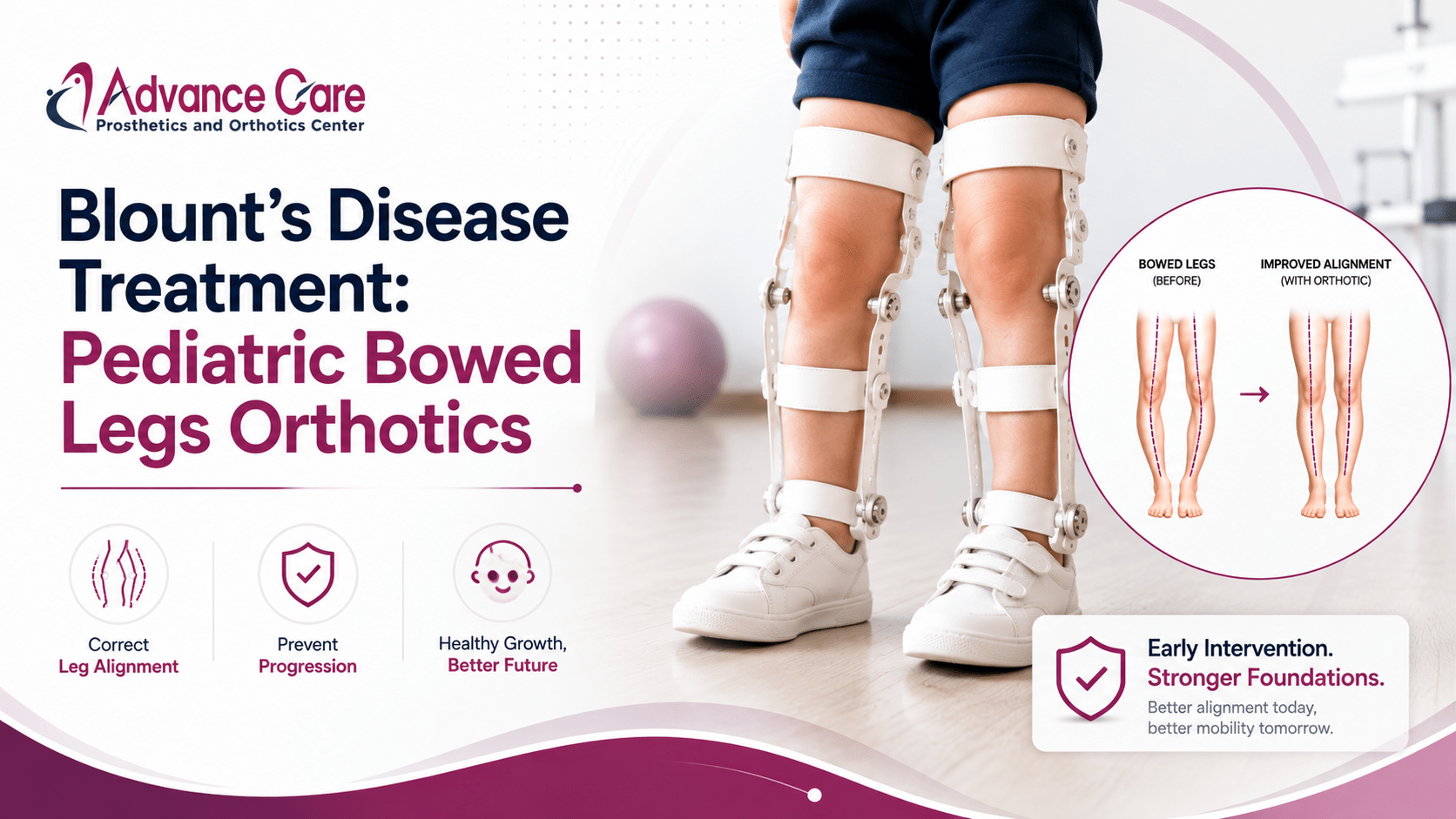
Infantile tibia vara, commonly known as Blount’s disease, is a progressive growth disorder characterized by an abnormal inward curvature of the lower leg. Unlike typical developmental bowing seen in toddlers which naturally resolves on its own Blount’s disease requires early, targeted clinical intervention to prevent long-term skeletal issues. For parents navigating this diagnosis, securing an effective blount’s disease treatment plan is essential for protecting a child’s structural development. A certified pediatric orthotist plays a vital role in this process by designing specialized pediatric bowing braces. These custom-molded orthoses apply precise, structural forces across the knee and shin, guiding lower limb alignment back into a neutral position as the child grows. By managing abnormal growth patterns early, these devices optimize joint function and significantly reduce the need for complex orthopedic surgeries later in life.
The Biomechanical Impact of Tibia Vara
Blount’s disease stems from a localized growth disturbance at the proximal tibial metaphysis the inner portion of the upper shin bone. When a child experiences this condition, the inner side of the growth plate slows down, while the outer side continues to develop normally.
This uneven growth creates a progressive bowing effect that alters how body weight is distributed across the lower limbs. Left unmanaged, the continuous, abnormal mechanical loads place severe strain on the developing knee joint.
As the bowing worsens, the joint capsule stretches, the surrounding ligaments become unstable, and the child may develop an asymmetric, limping gait that causes early joint wear and chronic discomfort.
Specialized Orthotic Options for Pediatric Bowing
Modern pediatric bracing utilizes lightweight, high-performance thermoplastics and low-profile aluminum uprights to provide superior structural correction without unnecessarily restricting a child’s play.
Custom Pediatric Bowing Braces
A custom-molded pediatric orthosis is specifically fabricated to manage the unique curves of an infant’s leg. These devices extend from the upper thigh down to the foot, ensuring comprehensive control over the entire lower limb.
By capturing a precise mold of the child’s anatomy, the orthotist can place supportive padding exactly where it is needed to counteract structural deviations without irritating sensitive skin.
Dynamic Night-Splinting Systems
For milder presentations or as part of a combined treatment protocol, specialized night braces apply a continuous, gentle corrective force while the child rests. This approach takes advantage of nocturnal growth spurts, ensuring that bone development is safely guided into alignment during sleep.
Real-World Transformations: Alignment and Mobility
The structural success of a custom bowing brace becomes clear when observing the gradual, measurable changes in a child’s skeletal alignment over months of consistent use.
- Normalization of Growth Plate Pressures: Shifting body weight away from the collapsed inner shin bone allows the stalled growth plate to recover and resume normal bone production.
- Improved Gait Symmetry: Straightening the lower leg restores an optimal heel-to-toe walking pattern, significantly reducing tripping and helping the child keep up with peers.
- Long-Term Joint Protection: Correcting the bowing early ensures that the ankles, knees, and hips develop in perfect alignment, preventing premature joint wear in adulthood.
Integrating Orthotics into Pediatric Care Plans
Achieving optimal corrective results requires strict adherence to clinical wear protocols and regular communication with your healthcare team.
- Strict Wear Schedule Compliance: To successfully remodel growing bone, braces must be worn consistently according to the prescribed timeline often ranging from 18 to 22 hours a day.
- Proactive Skin Integrity Checks: An infant’s skin is highly delicate. Caregivers must perform routine inspections after brace removal to identify and resolve localized redness before blisters form.
- Routine Structural Modifications: Because children grow rapidly, regular visits to the orthotist are required every few weeks to adjust padding, lengthen straps, and ensure the brace continues to guide growth perfectly.
Frequently Asked Questions
How does Blount’s disease differ from normal, developmental bowing in toddlers?
Developmental bowing is a normal part of growth that typically corrects itself naturally by the age of two as the child walks more. Blount’s disease is a specific structural growth disorder of the shin bone that worsens over time if left untreated, requiring professional orthotic intervention.
Is wearing a pediatric bowing brace painful for a young child?
No, modern custom orthoses are designed to apply gentle, constant structural leverage rather than sharp, sudden pressure. Most children adapt remarkably well within a few days and can crawl, stand, and play comfortably while wearing the device.
How long does a typical blount’s disease treatment course last?
The duration of orthotic therapy depends on the child’s age and the severity of the leg curvature at the start of treatment. On average, children wear custom bowing braces for twelve to eighteen months to achieve full structural alignment.
Can a child wear standard shoes with a custom bowing orthosis?
Custom bowing braces typically feature an integrated foot section that requires an extra-depth shoe or a slightly larger sneaker with a removable insole to accommodate the thickness of the plastic safely and comfortably.
What happens if a child with Blount’s disease does not receive treatment early?
If left unmanaged, the inward bowing will continue to worsen progressively. This can lead to a significant leg-length discrepancy, chronic knee instability, early-onset arthritis, and eventually require complex surgical bone realignment.
Conclusion
The successful implementation of custom pediatric orthotics highlights the incredible power of early, evidence-based biomechanical intervention. Whether using an advanced daytime bowing brace to realign the shin or a specialized night splint to take advantage of natural growth windows, these tailored devices provide the structural foundation required for children to build physical confidence. By rebalancing joint pressures and protecting developing bones, modern orthotics transforms skeletal challenges into straight paths forward. Work closely with an experienced team of pediatric orthotists and orthopedic physicians to establish a proactive care
plan, empowering your child to walk, run, and grow with a healthy, symmetrical foundation.