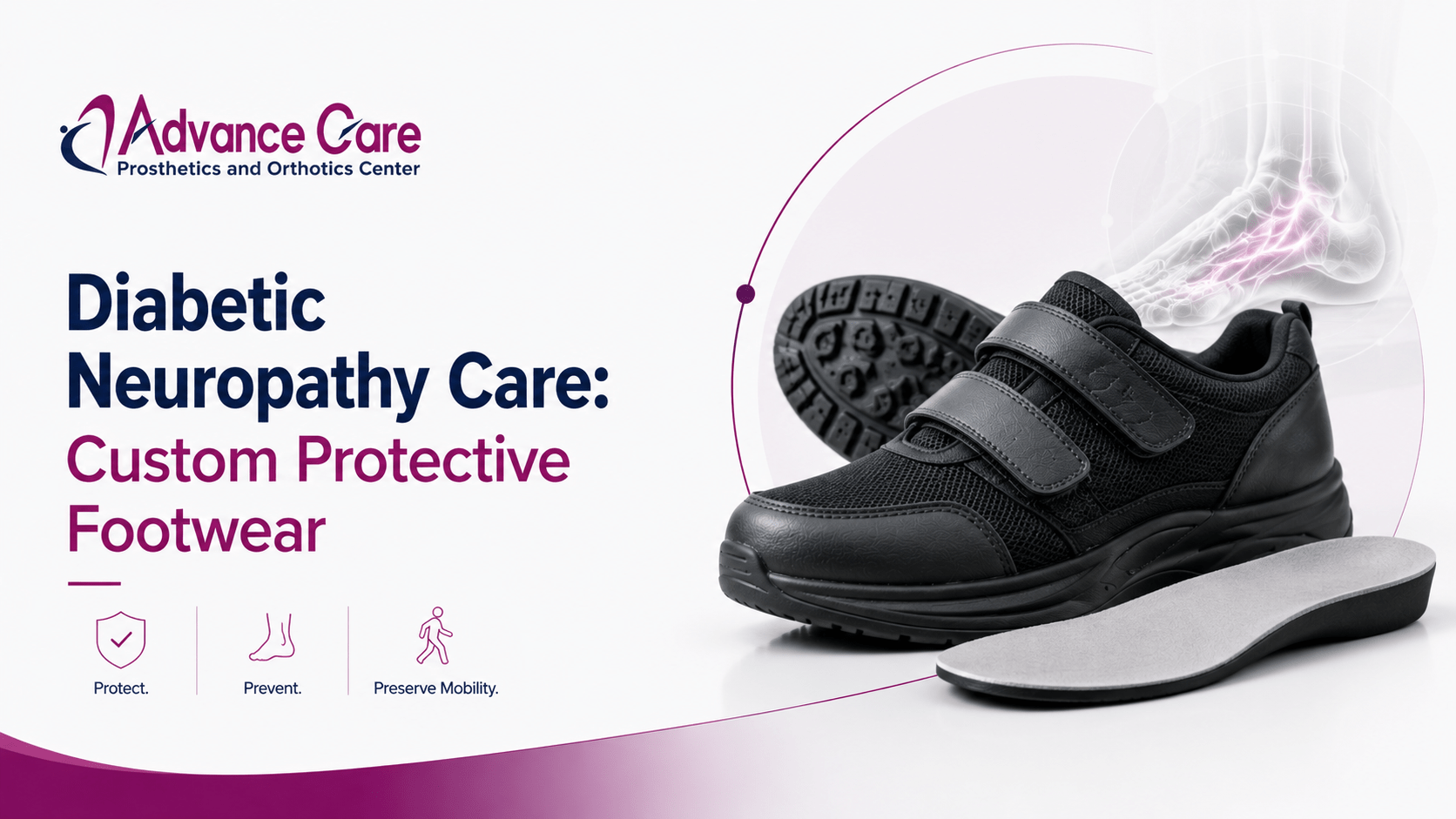
Advanced diabetic peripheral neuropathy represents one of the most serious and complex challenges in modern limb-salvage medicine. As chronic high blood sugar levels gradually damage the delicate peripheral nerves, patients lose their protective sensation—the ability to feel pain, friction, heat, or minor injuries across the feet. Without these natural sensory warnings, a tiny pebble in a shoe or a tight seam can quickly cause blisters and calluses that can deteriorate into deep, infected ulcers. Managing these risks requires a proactive care plan built around specialized diabetic neuropathy footwear. By pairing prescription extra-depth protective shoes with custom-molded total-contact inserts, clinicians can eliminate dangerous friction points and distribute weight evenly across the entire sole. This essential guide explores the clinical engineering and daily care habits required to safeguard insensitive feet, prevent complications, and protect long-term mobility.
The Pathomechanics of Neuropathic Foot Ulceration
Neuropathic skin breakdown does not happen randomly; it is the direct result of unmanaged, repetitive mechanical stress on skin tissues that have lost their natural resilience.
When a patient develops neuropathy, they also lose the autonomic nerve signals that keep the skin soft and hydrated, leading to dry, brittle skin that cracks easily.
Furthermore, changes in muscle control can cause the toes to curl into rigid shapes like claw toes, pushing the metatarsal bones down against the sole. During walking, your body weight concentrates onto these small, prominent areas, creating high-pressure zones that break down soft tissues and form dangerous ulcers.
Core Engineering Features of Prescription Diabetic Footwear
Prescription diabetic shoes are specialized medical devices engineered to minimize internal friction and protect fragile tissues.
| Advanced Design Feature | Biomechanical Purpose | Preventive Clinical Benefit |
| Seamless Soft Internal Lining | Eliminates rough internal stitching, ridges, and overlapping materials. | Completely prevents repetitive friction blisters along the sides of the feet and toes. |
| Extra-Depth Construction | Provides an additional 1/4 to 1/2 inch of vertical internal space. | Allows the shoe to accommodate thick custom orthotics without squeezing or crowding the toes. |
| Rigid Rocker-Sole Bottom | Creates a curved, rolling shape along the bottom of the shoe sole. | Alters walking mechanics to drastically reduce bending stress on the ball of the foot. |
Designing Custom Total-Contact Inserts
A prescription diabetic insert is custom-fabricated from multi-density, closed-cell foams to provide a personalized, highly protective interface for the foot.
- Targeted Pressure Offloading: The orthotist can carve out small pockets or add soft cushioning directly beneath high-pressure areas or healing calluses, shielding vulnerable spots from impact.
- Plastazote Superior Layer: The top layer consists of a specialized, lightweight foam called Plastazote. This material molds itself directly to the shape of the foot under body heat and weight, creating an exact match that reduces shifting.
- Total-Contact Support Arch: The insert is carefully shaped to fill the entire space beneath the foot, supporting the arch to take excessive weight off the heel and the ball of the foot.
Essential Daily Care and Foot Health Management
Using protective footwear is highly effective, but it must be paired with diligent daily hygiene habits to ensure comprehensive limb safety.
- Meticulous Daily Visual Inspection: Because you cannot feel a developing injury, you must visually inspect every part of your feet each night using a mirror, looking carefully for blisters, redness, cracks, or swelling.
- The Shoe Inspection Routine: Before sliding your foot into a shoe, always reach your hand inside to check for pebbles, torn linings, protruding stitches, or wrinkled insoles that could cause skin irritation.
- Consistent Indoor Foot Protection: Walking barefoot—even for a few steps inside your home—presents a major risk for insensitive feet. Always wear your protective shoes or a pair of structured, supportive diabetic slippers indoors.
Frequently Asked Questions
Why can’t I just wear standard, high-quality athletic sneakers for my diabetic neuropathy?
Standard athletic shoes often feature internal seams, mesh styles that stretch unpredictably, and narrow toe profiles that can squeeze insensitive tissues. Prescription diabetic footwear is built with specialized extra depth, a seamless interior, and a rigid rocker sole designed to protect fragile skin.
How often does a diabetic patient need to replace their custom foam inserts?
Because the protective foam compresses over months of continuous daily use, custom diabetic inserts typically need to be replaced every six months to ensure they continue to distribute pressure effectively and offload weight safely.
Will my health insurance or Medicare cover the cost of diabetic protective footwear?
Yes, under many therapeutic shoe programs (such as the Medicare Diabetic Shoe Benefit), qualified individuals with diabetes who exhibit signs of peripheral neuropathy or a history of calluses can receive coverage for one pair of protective shoes and three pairs of custom inserts each calendar year.
What should I do if I discover a red mark or a small blister on my foot?
If you notice any skin irritation, redness that does not fade after twenty minutes, or a fresh blister, you should stop wearing that pair of shoes immediately, clean the area safely, and contact your podiatrist or orthotist right away for an evaluation and shoe adjustment.
Can wearing specialized diabetic shoes reverse existing nerve damage in the feet?
No, protective footwear cannot reverse existing nerve damage or restore lost sensation. Instead, it serves as an essential preventative tool that manages the dangerous mechanical consequences of neuropathy, shielding your feet from injury and preventing ulcers.
Conclusion
Effectively managing advanced diabetic peripheral neuropathy requires an unwavering commitment to foot health and precise biomechanical protection. Utilizing specialized diabetic neuropathy footwear offers a proven defense against dangerous pressure areas and skin ulcers. By combining seamless, extra-depth shoes with custom-molded total-contact foam inserts, you can successfully protect insensitive tissues and maintain your physical independence. Work closely with your podiatrist, endocrinologist, and certified orthotist to implement a
comprehensive, daily protection routine, ensuring your feet remain healthy and secure for years to come.