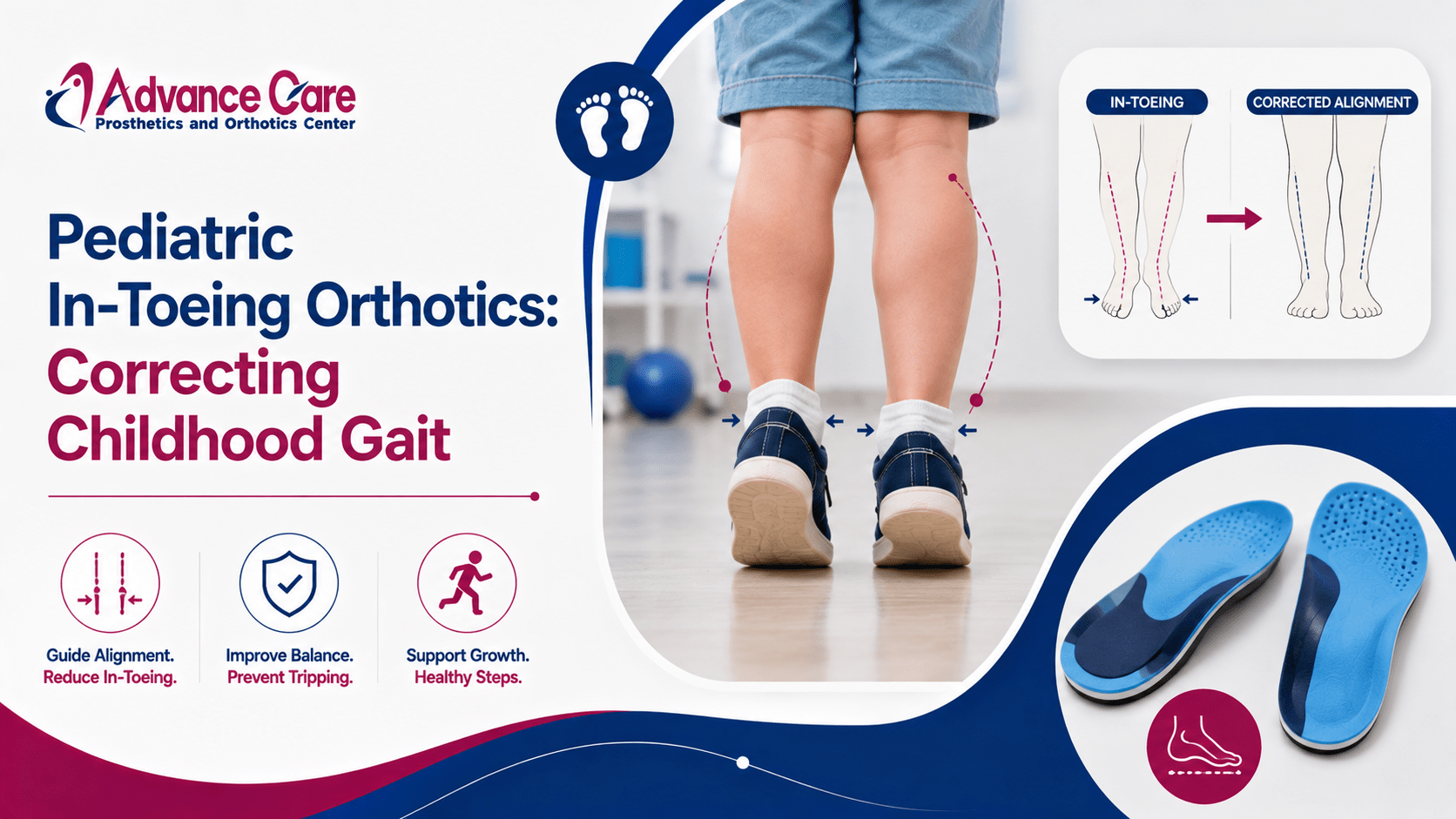
Observing changes in a child’s walking pattern can be a source of significant concern for parents and caregivers. Two of the most common variations seen in pediatric clinics are in-toeing—where the feet point inward toward each other and out-toeing where the feet flare outward like a penguin. While many of these gait variations are developmental and improve naturally as the child grows, some cases stem from underlying structural bone or muscle misalignments. When these rotation patterns persist or cause frequent tripping, specialized pediatric in-toeing orthotics offer an effective, non-surgical solution for guiding alignment. By understanding the foundational biomechanical principles of lower limb development, clinicians can design custom inserts that gently encourage the legs to rotate into a straighter, safer, and more coordinated walking pattern.
Structural Causes of Pediatric Rotational Misalignment
Rotational gait variations can stem from three distinct anatomical levels within the lower limb, requiring a careful clinical evaluation to determine the source.
- Femoral Anteversion: This condition involves an inward twist of the femur (thigh bone), causing the entire leg—including the knee and foot—to turn inward during walking. It is most noticeable in children between the ages of three and five, who often sit in a characteristic “W” position on the floor.
- Internal or External Tibial Torsion: Tibial torsion refers to a rotational twist within the tibia (shin bone). Internal tibial torsion causes the shin to twist inward and is a primary cause of toddlers in-toeing. Conversely, external tibial torsion twists the bone outward, leading to out-toeing that often becomes more noticeable during adolescence.
- Metatarsus Adductus: This is a common foot deformity where the front part of the foot (forefoot) turns sharply inward, giving the sole a distinct C-shaped appearance. It is typically a flexible condition resulting from a cramped position inside the womb before birth.
Biomechanical Mechanisms of Custom Gait Plates
A custom gait plate orthosis is a specialized foot insert engineered to alter the forces traveling beneath the foot, helping correct rotational walking patterns.
| Bracing Strategy | Biomechanical Mechanism | Expected Structural Outcome |
| In-Toeing Gait Plate | Extends the rigid outer edge of the insert forward beneath the little toes. | Forces the child to roll off the outer edge of the foot, naturally encouraging the hip to rotate outward. |
| Out-Toeing Gait Plate | Extends the rigid inner edge of the insert forward beneath the big toe. | Alters the foot’s pivot point during a step, gently guiding the leg to swing inward into alignment. |
Real-World Transformations: Balance and Coordination
The functional benefits of using custom pediatric orthotics extend far beyond simply straightening the appearance of the feet during a step.
- Significant Reduction in Tripping: Straightening the feet prevents the child from catching their toes on the back of their opposite heel, instantly lowering the risk of falls during running or play.
- Improved Muscular Efficiency: Correcting rotational misalignments allows the quadriceps and calf muscles to pull in a straight line, reducing muscle fatigue and keeping the child active longer.
- Balanced Growth Plate Alignment: Ensuring that weight-bearing forces travel evenly through the ankles, knees, and hips protects developing growth plates from asymmetric wear.
Comprehensive Management and Daily Integration
Helping a child adapt successfully to rotational gait orthotics requires clear guidance, consistency, and close collaboration with your clinical team.
- Consistent Footwear Pairing: Gait plates require a supportive, structured shoe with a firm heel counter and a secure closure system (like laces or strong hook-and-loop straps) to hold the foot in the correct position over the insert.
- Encouraging Healthy Sitting Postures: Caregivers should gently discourage children from sitting in the “W” position, as it places excessive rotational stress on the hips, and instead encourage cross-legged or straight-legged sitting.
- Routine Development Tracking: Children grow and change rapidly. Follow-up appointments with your orthotist every six months ensure the inserts continue to fit comfortably and match your child’s developmental progress.
Frequently Asked Questions
At what age should a parent seek medical advice for a child’s in-toeing?
If your child continues to turn their feet inward past the age of three, trips frequently during daily activities, or if the turning affects only one leg, a clinical evaluation by a pediatric specialist is highly recommended.
How do pediatric in-toeing orthotics work inside a standard shoe?
Custom gait plates feature a specialized, asymmetrical extension beneath the toes. This unique shape changes how the foot interacts with the ground during a step, forcing the child’s brain and muscles to naturally rotate the leg outward into straight alignment.
Will a child need to wear custom gait plates permanently?
No, gait plates are temporary developmental tools used while the child’s bones and muscles are growing rapidly. Most children wear them for one to three years, transitioning out of them once the leg muscles adapt to a stable, straight walking pattern.
Can metatarsus adductus be corrected using standard arch supports?
No, standard arch supports do not apply the necessary side-to-side corrective forces required to straighten a curved forefoot. Metatarsus adductus is managed using specialized corrective shoes, targeted stretching, or custom-molded orthopedic splints.
Do rotational gait variations cause permanent bone problems if left untreated?
The vast majority of developmental rotation patterns resolve naturally as the skeletal system matures. However, severe, unmanaged structural distortions can persist into adulthood, causing chronic knee pain, poor walking mechanics, and early joint wear.
Conclusion
Successfully managing pediatric rotational gait variations requires patience, careful clinical tracking, and highly targeted biomechanical support. Implementing custom pediatric in-toeing orthotics offers a gentle, non-surgical way to guide your child’s walking alignment, protect developing joints, and build physical confidence. By utilizing advanced gait plates to alter foot pivot points and encouraging healthy sitting habits, you can easily turn everyday play into an active alignment exercise. Work closely with an experienced team of pediatricians, physical therapists, and certified orthotists to monitor your child’s lower limb development early, ensuring they grow up with a straight, symmetrical, and confident foundation.