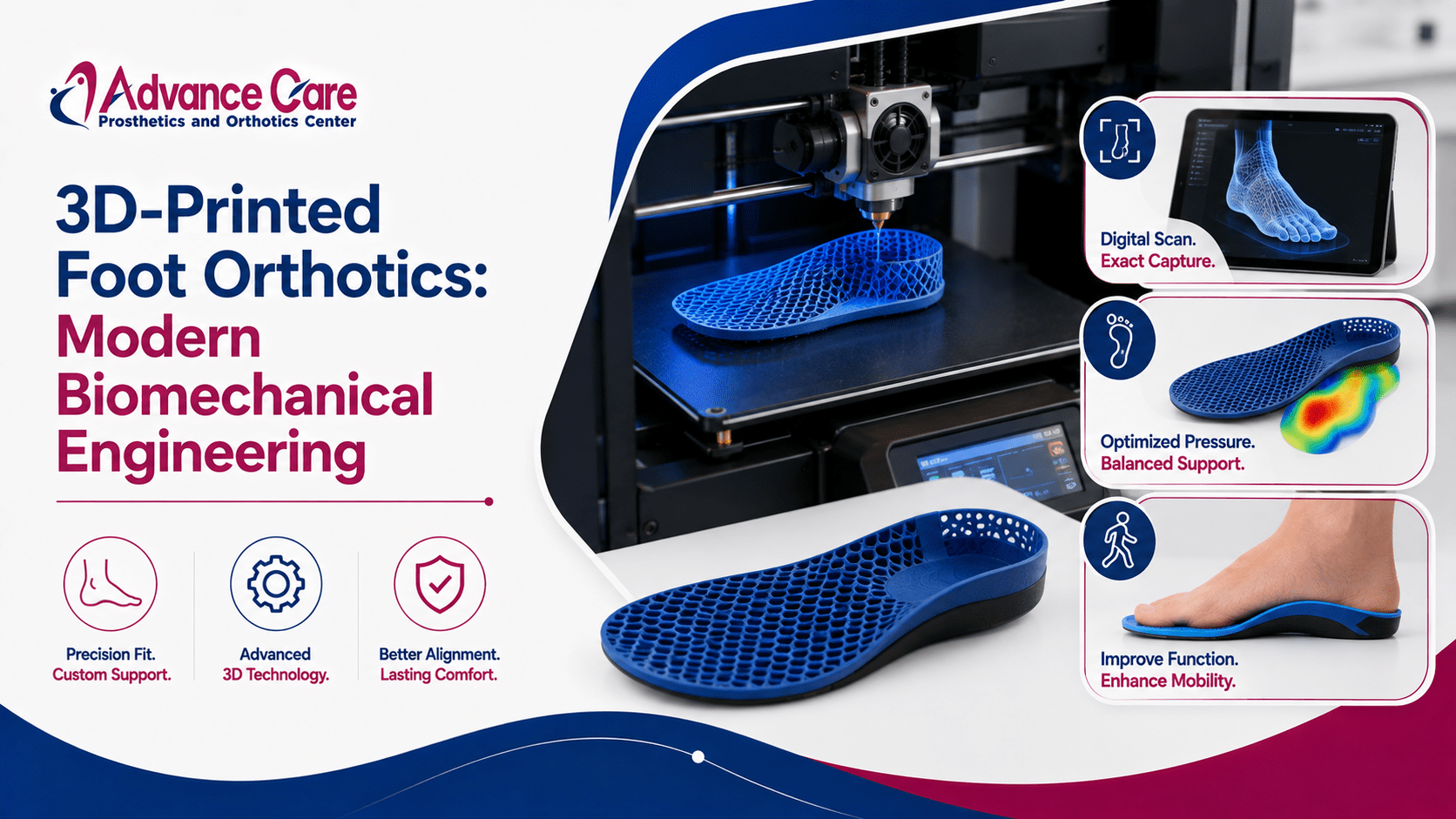
The field of podiatric medicine and orthopedic biomechanics is undergoing a major technological transformation, moving rapidly away from traditional hand-crafted manufacturing methods toward advanced digital engineering. For nearly a century, fabricating a custom shoe insert required messy plaster casting, manual foam modifications, and physical plastic thermoforming—processes that are prone to human error and variation. Today, the integration of high-resolution digital gait scanning and modern additive manufacturing has introduced a new era of care through 3D-printed foot orthotics. These precision-engineered devices offer unparalleled anatomical accuracy, a lightweight feel, and customizable support that traditional methods simply cannot replicate. This comprehensive guide explores how 3D-printing technology captures your exact foot structure, changes how we manage pressure distribution, and delivers exceptional comfort and joint stability.
The Modern Digital Workflow: Scan to Print
Creating a advanced 3D-printed orthosis follows a highly synchronized, all-digital pathway that eliminates the mess and margins of error associated with traditional plaster casting.
- Non-Invasive 3D Laser Scanning: The clinical process begins with a non-invasive 3D optical scan of the patient’s foot, held in its optimal corrected position. Within seconds, the scanner captures thousands of data points, creating a highly accurate 3D digital model of the foot sole down to the millimeter.
- Computer-Aided Design (CAD): The clinician imports the 3D model into advanced orthotic design software. Instead of manually carving plaster, the engineer uses digital tools to add arch support, create deep heel cups, and precisely map out pressure-relief pockets based on the patient’s gait analysis.
The Breakthrough Concept of Variable Density Lattices
The most significant clinical advantage of 3D-printed orthotics is the ability to print complex geometric internal lattice structures that offer variable flexibility within a single, seamless insert.
| Orthotic Section | Internal Lattice Design | Biomechanical Purpose |
| Heel Zone | Open, flexible hexagonal lattice structure. | Acts as a built-in shock absorber, absorbing heavy impact when the foot hits the ground. |
| Arch Section | Dense, cross-braced rigid lattice layout. | Provides firm, structural support to hold up the arch bone structure safely. |
| Forefoot Area | Low-density, ultra-plush springy design. | Relieves painful pressure beneath the ball of the foot and cushions the toes during a step. |
Clinical and Environmental Advantages of Digital Fabrication
Transitioning to additive manufacturing delivers exceptional benefits for patients, clinical providers, and the environment alike.
- Unmatched Geometric Precision: Automated 3D printing ensures that every contour designed in the software is reproduced exactly on the final device, eliminating human variation.
- Streamlined Digital Reordering: Since the patient’s 3D foot scan is saved securely in a digital database, ordering an identical replacement pair or an insert for a different shoe requires just a single click.
- Substantial Reduction in Material Waste: Traditional manufacturing requires carving a brace out of a large block of plastic or foam, leaving behind significant waste. 3D printing builds the insert layer by layer using only the exact amount of polymer needed.
- Ultra-Thin, Lightweight Comfort: Advanced 3D polymers allow the inserts to feature thin profiles that fit easily into modern athletic, casual, and dress footwear without sacrificing durability.
Frequently Asked Questions
Are 3D-printed foot orthotics as durable as traditional plastic inserts?
Yes, 3D-printed orthotics are often more durable than traditional options. They are fabricated from high-grade engineering polymers, such as nylon, which resist cracking, fading, and collapsing under body weight over years of daily use.
How does a 3D foot scan differ from standing on a store gel kiosk?
Store gel kiosks simply measure flat weight distribution while standing still. A professional 3D clinical scan captures the entire three-dimensional shape of your foot in an optimized, corrected position, allowing for a truly custom-tailored medical device.
Can 3D-printed orthotics be modified if I experience a localized pressure point?
Yes, while the polymers are exceptionally strong, they can be carefully heated, grinded, or padded by your orthotist in the clinic to customize fit or add localized pressure relief if needed.
Are these advanced digital orthotics suitable for high-impact running and sports?
Absolutely. The ability to design variable-density internal lattices makes 3D-printed orthotics ideal for athletes, as they can deliver rigid structural control for foot stability while incorporating highly flexible shock absorption to handle intense running forces.
How long does it take to manufacture a pair of 3D-printed orthotics?
Because the digital design file can be sent instantly to an additive printing facility, the manufacturing and delivery timeline is often faster than traditional casting, typically taking between five and ten business days.
Conclusion
The rapid rise of additive manufacturing represents a major milestone in modern podiatric medicine and personalized biomechanical care. Utilizing advanced 3D-printed foot orthotics gives patients access to a highly precise, comfortable, and durable solution for managing foot pain and correcting alignment issues. By replacing messy plaster molds with non-invasive digital laser scans and using variable-density lattice designs, these cutting-edge devices deliver tailored support exactly where your body needs it. Step confidently into the future of foot health; consult with a forward-thinking orthotic specialist to explore how custom 3D-printed orthotics can protect your joints and restore pain-free movement.