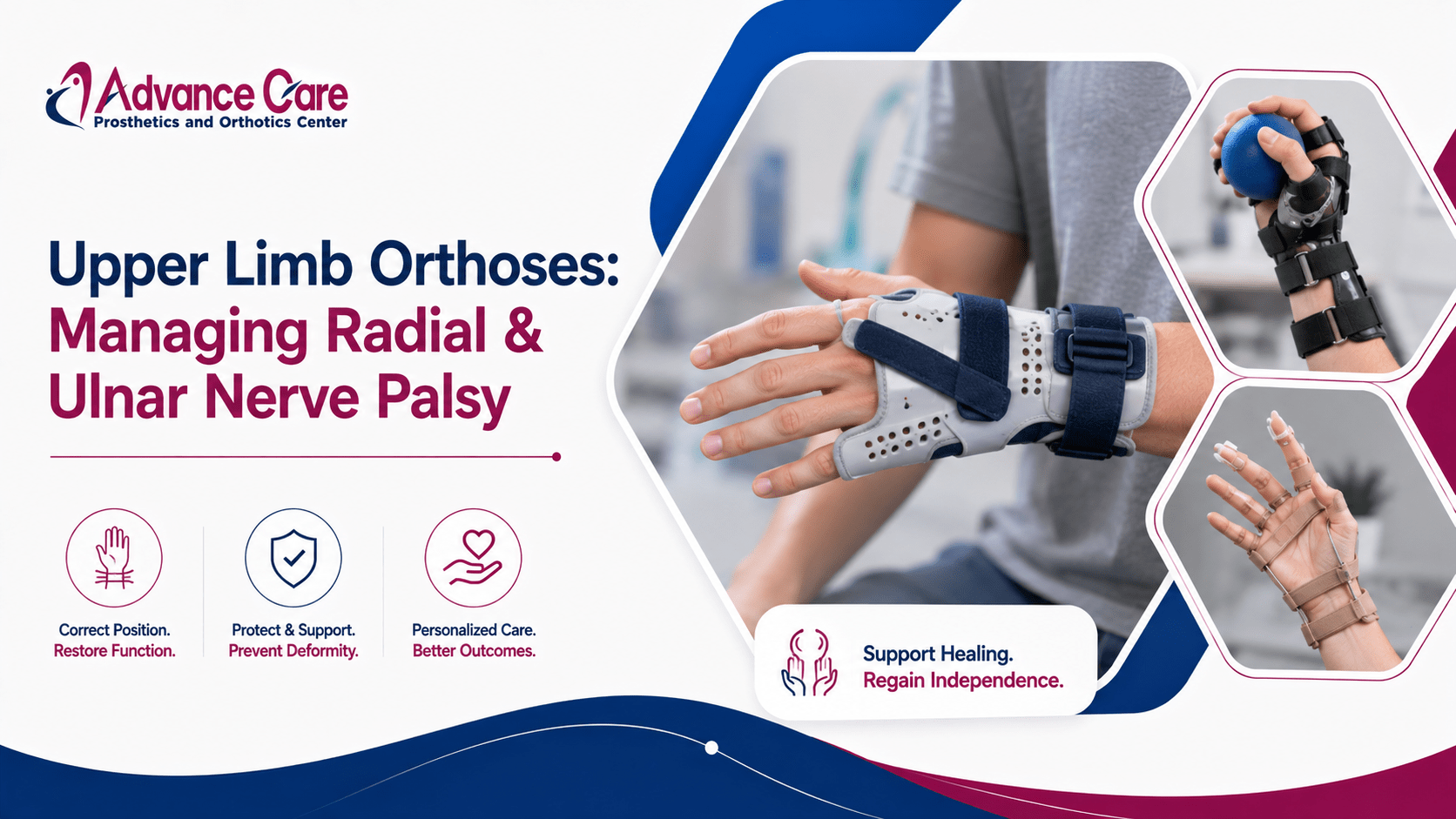
Peripheral nerve injuries across the upper extremity introduce immediate, complex functional challenges that can severely limit a patient’s ability to perform essential daily tasks. Damage to the radial or ulnar nerves disrupts the delicate balance of motor signals traveling to the hand, causing characteristic deformities that impair your grip and fine motor coordination. For individuals navigating these neurological conditions, implementing custom-engineered upper limb orthoses is a vital step toward reclaiming hand functionality. Whether managing post-traumatic radial nerve wrist drop or an advanced ulnar nerve claw hand deformity, specialized dynamic and static splints provide the essential structural support required to position the joints correctly. This clinical guide explores the advanced design principles, mechanical mechanisms, and rehabilitation strategies that make custom upper extremity orthoses an indispensable tool for restoring independent hand function.
The Neuromuscular Pathomechanics of Upper Limb Palsies
The primary peripheral nerves of the arm follow long pathways that are highly vulnerable to lacerations, fractures, or chronic compression injuries.
- Radial Nerve Palsy and Wrist Drop: The radial nerve controls the extensor muscles responsible for lifting the wrist and straightening the fingers. When this nerve is injured often due to a mid-shaft humerus bone fracture—the patient experiences complete wrist drop. Without an external device to hold the hand up, the wrist hangs down in a flexed position, making it impossible to open the fingers effectively or maintain a strong grip.
- Ulnar Nerve Palsy and Claw Hand: The ulnar nerve coordinates the tiny intrinsic muscles between the fingers that handle fine movements and precision gripping. An injury to this nerve causes an muscle imbalance: the ring and little fingers pull back excessively at the base joints while curling down tightly at the tips, creating a rigid claw hand posture that severely limits hand use.
Specialized Upper Limb Orthotic Matrix
Modern upper extremity orthotics utilizes lightweight, low-temperature thermoplastics and precise spring-loaded mechanisms to restore a functional hand position.
| Nerve Injury | Recommended Orthotic Design | Biomechanical Correction Mechanism |
| Radial Nerve Palsy | Dynamic Wrist Drop Splint | Uses spring-loaded wires or elastic bands to pull the wrist and fingers up into an open, functional position. |
| Ulnar Nerve Palsy | Anti-Claw Ring Splint (LMB Splint) | Applies a gentle downward force over the base finger joints, preventing them from hyperextending. |
Biomechanical Mechanisms of Functional Dynamic Splinting
A dynamic upper limb orthosis does not simply hold the hand completely still; instead, it acts as an external replacement for weak muscles, allowing for functional movement.
- Assisted Extension Elastic Forces: In a dynamic wrist drop splint, flexible rubber bands or spring wires mimic the action of the paralyzed extensor muscles, pulling the wrist up into a neutral position automatically.
- Unrestricted Active Finger Flexion: The dynamic tension is calibrated to be strong enough to hold the hand open at rest, yet flexible enough to allow the patient to bend their fingers inward naturally to grip objects.
- Prevention of Muscle Shortening: Holding the wrist and fingers in a straight, neutral position stops the opposing flexor tendons from shortening into rigid contractures while the nerve recovers.
Comprehensive Upper Extremity Rehabilitation Protocols
Achieving optimal functional recovery requires a well-rounded, multi-disciplinary approach that combines custom bracing with targeted occupational therapy.
- Targeted Occupational Therapy: Patients participate in dedicated therapy sessions to practice everyday tasks—such as writing, using utensils, and grasping cups—while using the custom orthosis.
- Proactive Sensory Protection: Nerve injuries often cause localized numbness. Patients must learn to inspect their hands daily for unnoticed cuts or pressure marks from the splint.
- Routine Splint Adjustments: As nerve regeneration progresses and muscle strength gradually returns, the orthotist adjusts the spring tension of the brace to match the patient’s improving control.
Frequently Asked Questions
What makes a custom upper limb orthosis better than a generic, off-the-shelf wrist splint?
Generic wrist splints are designed to immobilize the entire hand in a rigid position, which prevents you from using your fingers. A custom dynamic orthosis holds the wrist up safely while allowing your fingers to bend freely, enabling you to grasp and release everyday objects.
How long does a patient typically need to use an upper limb splint after a nerve injury?
The duration of orthotic therapy corresponds directly to the rate of peripheral nerve healing, which typically progresses at a rate of about one millimeter per day. Depending on the location of the injury, patients may use a splint for three to twelve months.
Can an anti-claw splint for ulnar nerve palsy be worn discreetly during work?
Yes, modern anti-claw orthoses are exceptionally low-profile, often crafted from lightweight plastics or sleek metallic rings that slide over the finger joints, allowing them to fit comfortably and discreetly into professional and daily environments.
Will my hand muscles waste away if I wear a custom dynamic splint for months?
No, dynamic splints are specifically designed to encourage movement. By positioning your wrist in a functional alignment, the brace actually enables you to use your fingers actively throughout the day, which helps preserve overall hand strength.
What warning signs indicate that my upper limb orthosis needs an adjustment?
You should visit your occupational therapist or orthotist immediately if you notice localized skin burning, numbness or tingling in your fingertips that worsens while wearing the brace, or deep red pressure marks that do not fade within twenty minutes.
Conclusion
Navigating a severe peripheral nerve injury in the arm requires a comprehensive, highly targeted approach to joint alignment and muscle preservation. Utilizing advanced upper limb orthoses offers an exceptionally effective, evidence-based pathway for overcoming the functional limits of wrist drop and claw hand deformities. By choosing a precision-molded dynamic splint tailored to your unique anatomy, you can instantly restore a functional resting position, maintain your grip strength, and perform daily tasks with ease. Work closely with a skilled team of hand surgeons, occupational therapists, and certified orthotists to implement a personalized care plan, ensuring your joints remain healthy and protected throughout your recovery journey.