
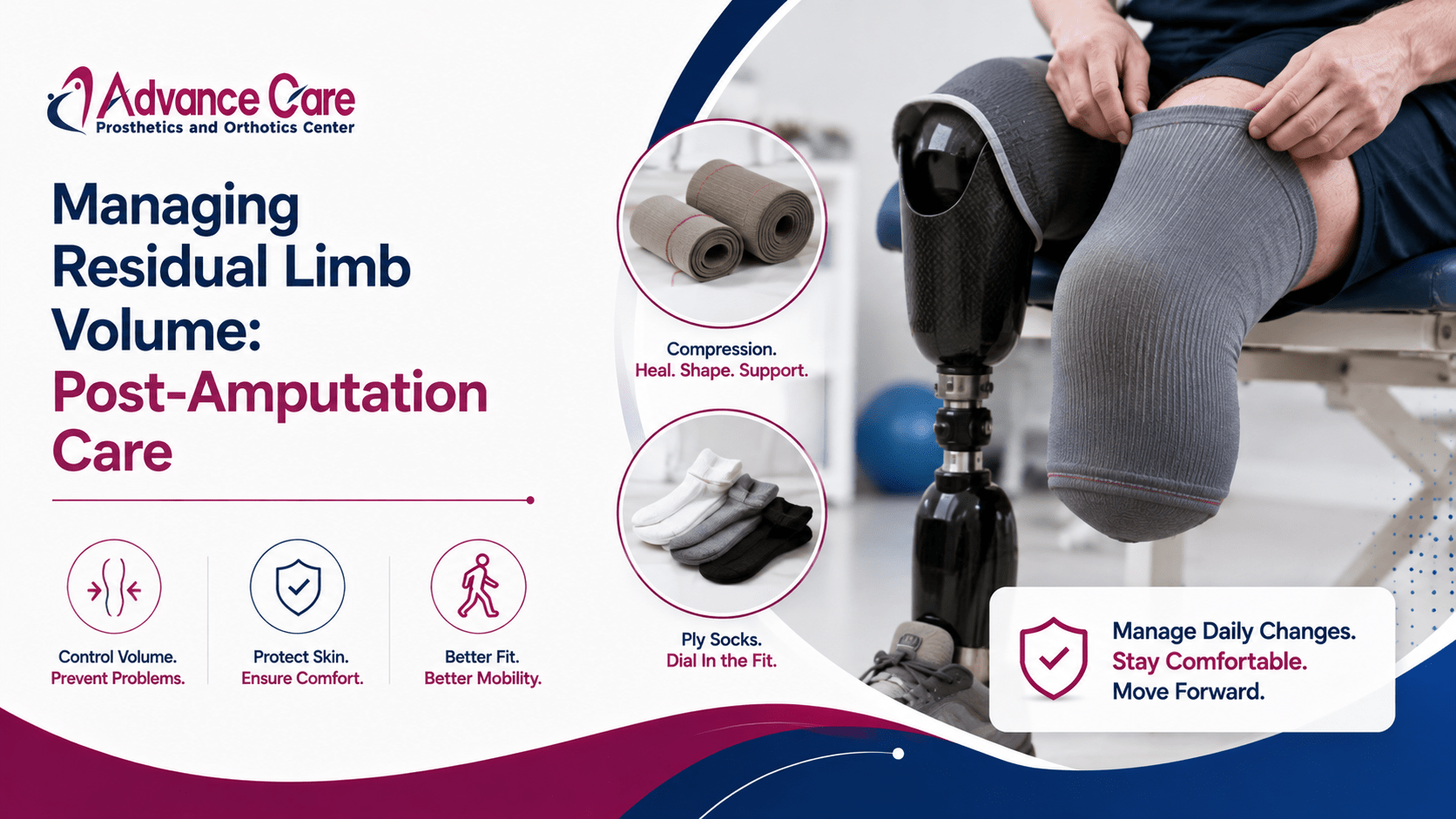
The first twelve to eighteen months following lower limb amputation surgery represent a dynamic and critical window for a patient’s physical recovery and prosthetic adaptation. During this post-operative phase, the residual limb experiences continuous, significant changes in its overall size, fluid retention, and muscle shape. This natural process is driven by post-surgical healing, muscle thinning from decreased use, and daily fluid shifts within the body. For new amputees, learning the art and science of residual limb volume management is an essential skill for ensuring long-term comfort and safety. If these daily volume changes are left unmanaged, a prosthetic socket that fit perfectly in the morning can become dangerously loose or excessively tight by the afternoon. This comprehensive guide outlines how to use specialized compression shrinkers, master prosthetic ply socks, and optimize socket fit to safeguard your skin and maintain stable, pain-free mobility.
The Biology of Post-Amputation Leg Changes
Following a major surgical procedure like an amputation, the remaining tissues experience a predictable series of structural and fluid changes as they heal.
- Acute Post-Operative Swelling: Immediately after surgery, the body sends fluid and blood flow to the injured area, causing significant swelling. If this fluid trapping is left uncheck, it delays incision healing, increases pain, and postpones your timeline for getting fitted for a prosthesis.
- Muscle Structural Thinning: As the leg heals and transitions to wearing a prosthesis, the muscles that used to move the ankle or knee naturally thin out from decreased use a process called atrophy. This muscle loss causes the residual limb to permanently shrink and take on a streamlined, cone-like shape over the first year, which is essential for achieving a comfortable, long-term socket fit.
Key Tools for Fluid Control and Compression
Proactively managing leg swelling requires utilizing specialized compression garments designed to stabilize fluid levels and shape the tissues safely.
| Management Garment | Primary Biomechanical Purpose | Clinical Protocol Guidelines |
| Compression Limb Shrinker | Applies a steady, elastic pressure that tapers toward the top of the leg to clear fluid. | Worn continuously day and night during the early recovery weeks; removed only for bathing. |
| Prosthetic Ply Socks | Knit cotton or wool socks used to add thickness inside the socket frame. | Added or removed throughout the day as the leg shrinks or swells to keep the fit snug. |
The Mechanics of Prosthetic Ply Sock Management
Mastering how to layer prosthetic socks is the most vital daily skill an amputee can develop to protect their skin from friction injuries. As an amputee walks throughout the day, the pressure of the socket gently forces fluid out of the residual limb, causing it to shrink slightly. To fill this newly created empty space, the patient must add specialized ply socks over their soft liner. If they fail to add socks, the leg will slide too deep into the device. This misalignment causes the edges of the socket to pinch sensitive skin and places heavy friction on the bottom tip of the bone, quickly causing painful skin breakdown and deep ulcers.
Long-Term Strategies for Socket Fit Optimization
Ensuring your prosthesis continues to fit comfortably as your body changes requires consistent tracking and regular clinical updates.
- Fabricating a Custom Socket Replacement: Once the residual limb stabilizes and reaches a matured size, your prosthetist will take a fresh mold of your leg to build a smaller carbon fiber socket, eliminating the need for bulky sock layering.
- Tracking Your Daily Sock Count: If you find yourself needing to layer more than 10 to 15 plies of socks to keep your prosthesis snug, it is a clear clinical sign that your leg has shrunk permanently and your socket has become too large.
- Proactive Weight and Fluid Tracking: Sudden changes in your body weight or health conditions that cause fluid retention (such as kidney or heart conditions) will alter your leg size, requiring immediate brace adjustments.
Frequently Asked Questions
Why does my residual limb change size so frequently between morning and night?
When you sleep flat at night, fluid distributes evenly across your body, causing your leg to swell slightly by morning. As you stand and walk during the day, the pumping action and pressure of the prosthetic socket force fluid out of the leg, causing it to shrink by evening.
What is the difference between a 1-ply, 3-ply, and 5-ply prosthetic sock?
Ply refers to the thickness of the knit fabric. A 1-ply sock is very thin, providing a minor adjustment, while a 5-ply sock is substantially thicker. You can combine different thicknesses (such as a 3-ply and a 1-ply) to achieve a perfect, snug fit inside your socket.
Can I use regular athletic socks over my prosthetic liner if I run out of ply socks?
No, standard athletic socks feature rough seams, irregular ribbing, and elastic fibers that bunch up inside a socket, creating high-risk friction points that can cause skin sores. Always use seamless, medical-grade prosthetic ply socks prescribed by your clinician.
How do I know if my compression limb shrinker is on too tight?
Warning signs that your shrinker is restricting blood circulation include throbbing pain in your leg, a cold or blue sensation at the tip of your limb, or sudden numbness that doesn’t go away. If you notice these symptoms, remove the garment immediately.
How many months does it take for a residual limb to reach a stable, permanent size?
On average, a residual limb takes between twelve and eighteen months after surgery to mature, shed excess fluid, and thin down into a stable, permanent size and shape.
Conclusion
Successfully adapting to a lower limb prosthesis requires an ongoing commitment to monitoring your body’s fluid changes and managing skin safety. Implementing active residual limb volume management through the consistent use of compression shrinkers and precise ply sock adjustment offers a highly effective defense against socket slippage and painful friction sores. By learning to recognize when your leg has shrunk and layering your socks correctly, you can successfully protect fragile tissues and maintain stable, comfortable alignment all day long. Work closely with your certified prosthetist and physical therapist to master these daily care techniques, ensuring you can walk with confidence and protect your long-term joint health.