Managing acute lower extremity orthopedic trauma requires a delicate balance between rigid structural stabilization and early, controlled movement to support tissue recovery. When a patient experiences a severe injury—such as an acute ankle fracture, syndesmotic ligament tear, or post-surgical trauma protecting the vulnerable joint complex is paramount. For decades, traditional heavy plaster casts were the standard approach; however, modern orthopedics has evolved to utilize advanced ankle immobilizer boot systems as the gold standard for conservative care. A high-performance pneumatic compression walker offers unmatched structural immobilization while allowing healthcare providers to regularly inspect wounds and begin early rehabilitation. This professional clinical guide explores the essential indications, biomechanical design principles, and step-by-step patient protocols that make the immobilizer boot an indispensable tool for safe, effective trauma recovery.
Biomechanical Principles of Trauma Offloading
An ankle immobilizer boot achieves its therapeutic outcomes by fundamentally altering how weight-bearing forces travel through the lower leg, protecting healing bones and soft tissues from destructive stress.
Rigid Structural Shell Protection
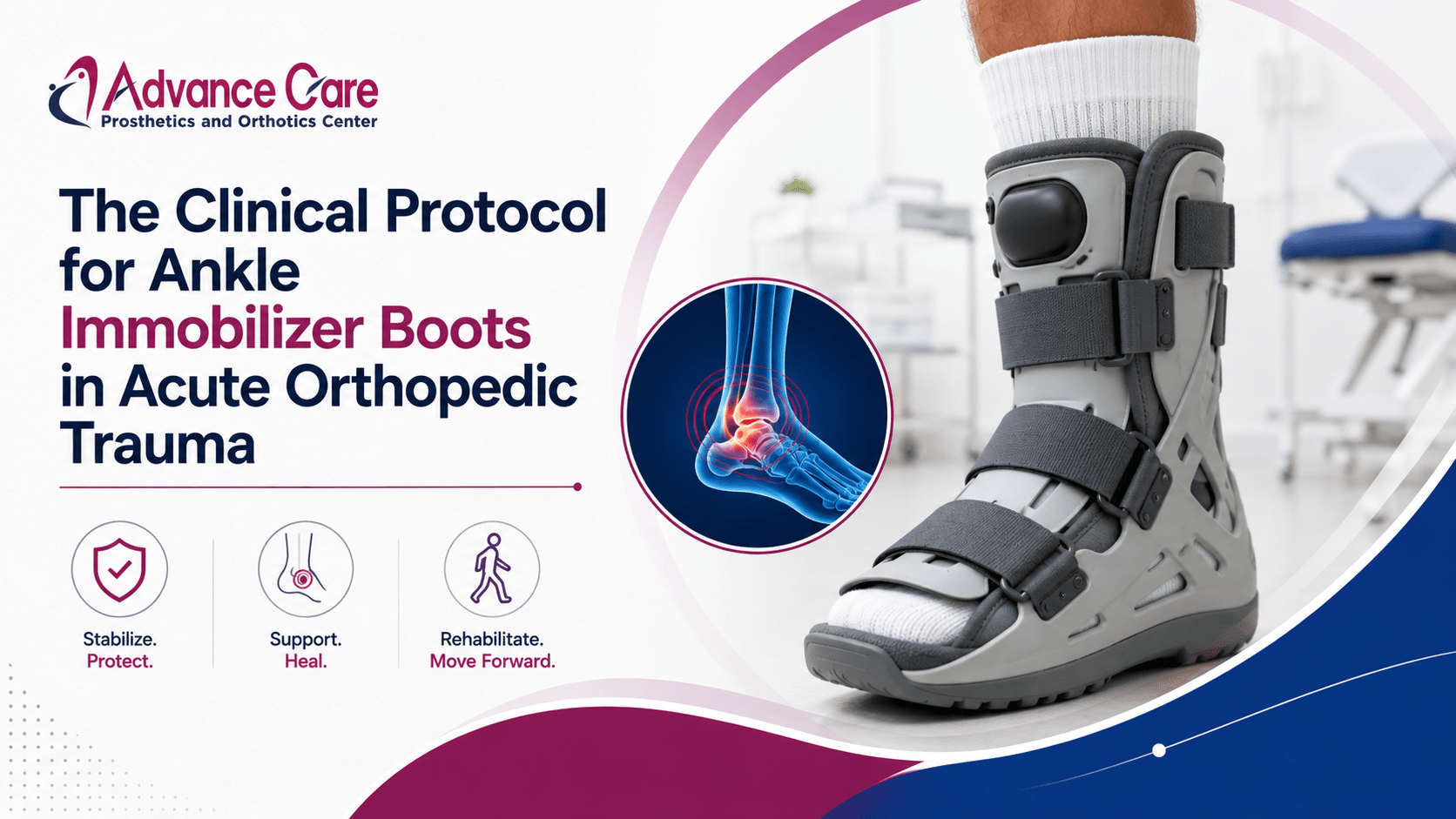
The exterior of a premium immobilizer boot consists of a high-strength, contoured plastic shell or dual metal uprights that span from the upper calf to the toes. This rigid framework acts as an external shield, completely blocking painful side-to-side movement, twisting, and bending at the ankle joint.
Pneumatic Compression Technology
Built-in air bladders line the interior of the boot, allowing patients to use an integrated pump to customize their level of compression.
This pneumatic support fills the empty spaces around the ankle, providing an exact total-contact fit. This consistent pressure helps reduce localized swelling, improves circulation, and stabilizes fractured bone fragments.
Advanced Indications for Immobilizer Boot Protocols
Immobilizer boots are highly versatile tools used across a wide spectrum of acute orthopedic injuries requiring strict motion control.
| Injury Classification | Biomechanical Objective | Clinical Recovery Benefit |
| Stable Distal Fibula Fracture | Completely blocks ankle rotation and bending forces. | Eliminates micromovement at the break site, allowing bone tissue to knit safely. |
| Grade III Ligament Sprain | Holds the ankle joint in a strict, neutral ninety-degree angle. | Takes all tension off torn ligaments, letting fibers heal without stretching out. |
| Post-Achilles Tendon Repair | Restricts forward bending while allowing controlled downward pointing. | Protects the surgically stitched tendon from tearing during early recovery phases. |
Essential Patient Care and Integration Guidelines
Ensuring a safe and successful recovery with an ankle immobilizer boot requires strict adherence to clinical protocols and careful daily hygiene.
- Gradual Weight-Bearing Progression: Patients must follow their orthopedic physician’s exact weight-bearing schedule, transitioning safely from non-weight-bearing with crutches to full weight-bearing as bone healing progresses.
- Meticulous Daily Skin Inspection: Because the boot fits snugly, patients should remove it daily while keeping the leg resting safely still to inspect the skin for red marks or pressure areas, especially over bony ankles.
- Hygiene and Sock Management: Always wear a clean, moisture-wicking, knee-high orthotic sock beneath the boot liner. This practice absorbs sweat, reduces friction against the skin, and keeps the internal foam lining clean.
Frequently Asked Questions
Can I remove my ankle immobilizer boot at night while sleeping?
Unless your orthopedic doctor explicitly gives you permission, you should keep the boot secured at night. Involuntary leg movements or rolling over during sleep can place dangerous twisting forces on a fresh fracture or torn ligament, delaying your recovery.
How do I adjust the air pressure inside a pneumatic immobilizer boot?
To increase the pressure, squeeze the small, integrated bulb pump until the internal bladders feel snug and supportive around your ankle. To reduce pressure if the boot feels too tight, simply press the small release valve next to the pump to let air escape.
Is it safe to drive a car while wearing an ankle immobilizer boot?
If the boot is on your right leg, driving is strictly unsafe and rarely permitted, as the bulky shell impairs your ability to quickly and safely switch between the gas and brake pedals. If the boot is on your left leg and you drive an automatic vehicle, driving may be acceptable—consult your physician first.
How should I clean the internal foam liner of my walking boot?
Unfasten the straps, carefully slide the foam liner out of the plastic shell, and hand-wash it using warm water and a mild soap. Allow the liner to air-dry completely before reassembling the boot; never use a machine dryer, as high heat can warp the foam.
What signs indicate that my immobilizer boot is fitted incorrectly or needs adjustment?
Warning signs that require an immediate clinical check include localized burning pain over a bony area, tingling or numbness in your toes, increased swelling, or skin redness that does not fade within twenty minutes of loosening the straps.
Conclusion
Successfully recovering from acute lower extremity trauma requires an effective balance of rigid structural safety and proactive clinical management. Utilizing an advanced ankle immobilizer boot delivers the unyielding stabilization necessary to protect healing tissues while offering the functional flexibility needed for a smooth recovery. By understanding how the rigid shell offloads weight and managing your pneumatic compression carefully, you can successfully navigate the phases of bone and ligament healing. Work closely with your orthopedic specialist and physical therapist to follow a structured recovery protocol, ensuring your ankle heals with optimal strength, alignment, and long-term joint health.