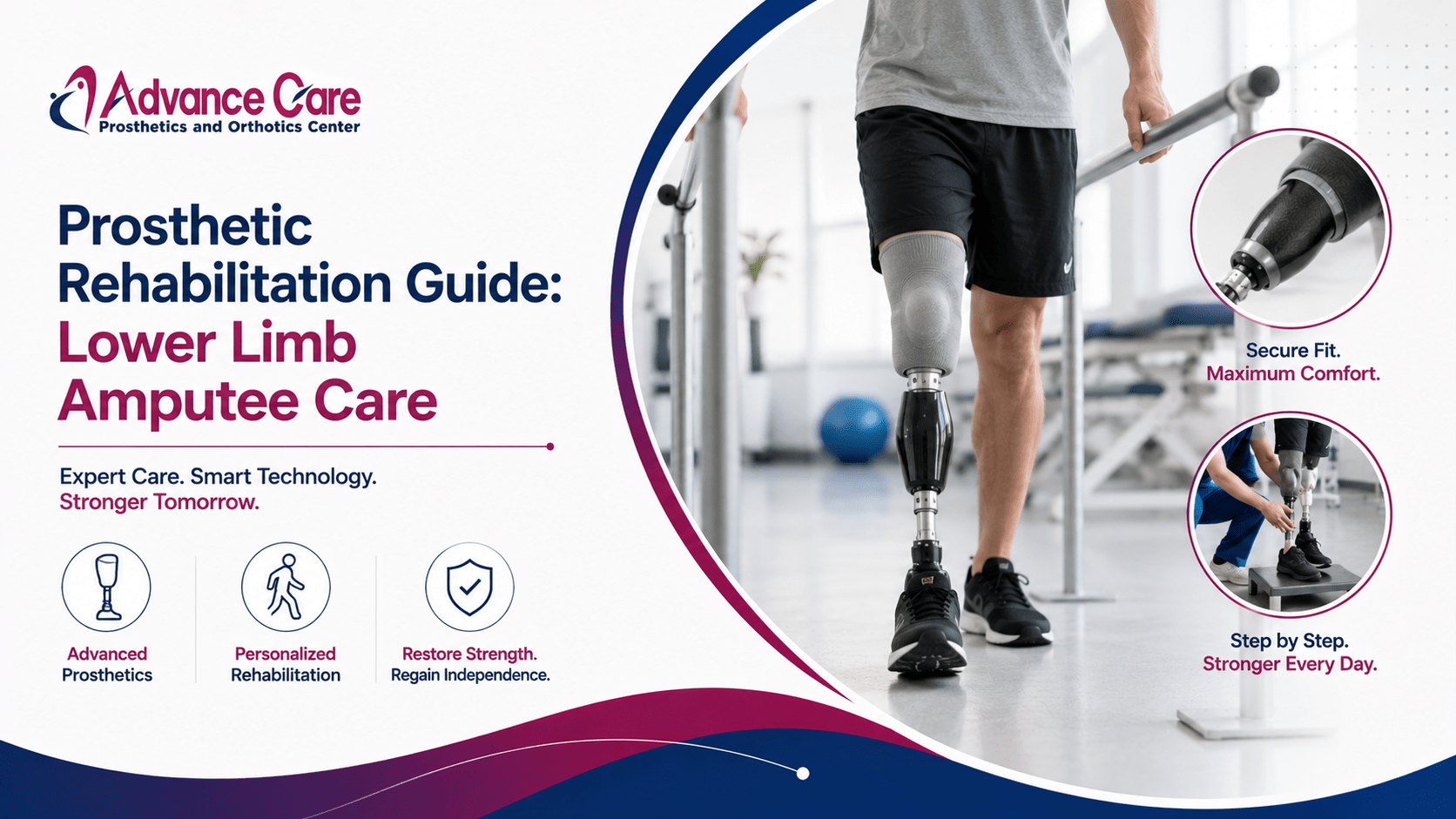
Undergoing a lower limb amputation represents a profound, life-altering milestone that introduces significant physical and psychological challenges for a patient. Whether resulting from chronic peripheral vascular disease, advanced diabetic complications, or sudden traumatic injury, losing a limb requires a structured, multi-disciplinary approach to restore independent mobility. Navigating this transition successfully demands access to an expert, evidence-based prosthetic rehabilitation guide to clarify the path toward recovery. The journey from early post-surgical wound healing to confident community walking relies on a complex combination of specialized medical care, advanced prosthetic engineering, and targeted physical rehabilitation. By understanding the core principles of socket design, secure suspension systems, and gait mechanics, amputees can safely adapt to their new device, protect their remaining joints, and walk back toward a fulfilling, independent lifestyle.
Core Anatomy of Lower Limb Prosthetic Systems
A modern lower limb prosthesis is a precision-tailored mechanical structure made up of three essential components that work together to replace lost skeletal function.
- The Custom-Tailored Socket: The socket is the most critical part of any prosthesis, serving as the direct physical interface between the patient’s residual limb and the mechanical components. For a below-knee (transtibial) amputee, the socket is molded to distribute weight across pressure-tolerant areas like the patellar tendon. For an above-knee (transfemoral) amputee, advanced ischial containment designs surround the pelvic bone to provide stable lateral control during walking.
- Secure Suspension Systems: The suspension system anchors the prosthesis securely to the body, preventing the device from slipping or pulling away during a step a problem known as pistoning. Modern options include airtight vacuum suction liners, mechanical pin-locking systems, and flexible neoprene sleeves.
- High-Performance Endoskeletal Components: The interior pylon replaces the lost shin or thigh bone, connecting the socket to an advanced prosthetic foot. Modern feet feature carbon fiber plates that absorb ground shock and flex naturally, springing the patient forward into a smooth step.
The Phased Rehabilitation Pipeline
Reclaiming your mobility follows a structured, step-by-step clinical pathway designed to build strength and ensure long-term skin safety.
| Rehabilitation Phase | Primary Clinical Focus | Biomechanical Objective |
| Phase 1: Post-Op Healing | Specialized compression wrapping and using limb shrinkers. | Controls swelling, shapes the residual limb, and prepares tissues for a socket. |
| Phase 2: Diagnostic Fitting | Fabricating a transparent plastic temporary socket. | Allows the prosthetist to visually inspect fit, check alignment, and adjust pressure points. |
| Phase 3: Gait Training | Intensive physical therapy using parallel bars and crutches. | Teaches core balance, helps the patient master the device, and straightens walking alignment. |
| Phase 4: Definitve Delivery | Crafting the final carbon fiber socket and optimizing alignment. | Restores full independent mobility for community walking and daily activities. |
Mastering Daily Limb Volume Fluctuations
One of the most important skills a new amputee must learn is how to proactively manage daily variations in the size and shape of their residual limb.
- The Role of Prosthetic Ply Socks: Over the course of a day, a residual limb naturally loses fluid and shrinks slightly. Amputees manage this change by adding specialized knit socks (measured in 1-ply, 3-ply, or 5-ply thicknesses) over their liner to maintain a snug socket fit.
- Preventing Socket Slippage Damage: If a socket fits too loosely because socks weren’t added, the limb will slide too deep into the device, causing painful bruising, skin friction, and sores at the tip of the bone.
- Maintaining Continuous Clinical Follow-Ups: During the first year after surgery, the residual limb matures and shrinks permanently, requiring regular visits to the prosthetist to modify the socket lining or fabricate a smaller shape.
Frequently Asked Questions
How long after undergoing amputation surgery can a patient expect to receive their first prosthesis?
On average, patients receive their initial temporary diagnostic prosthesis between six and eight weeks after surgery, provided the surgical incision has completely closed, the stitches are removed, and localized swelling has stabilized.
What is the main functional difference between a transtibial and a transfemoral prosthesis?
A transtibial prosthesis replaces the lower leg and foot, allowing the patient to use their natural knee joint for easy balance and movement. A transfemoral prosthesis must replace the knee joint as well, incorporating advanced mechanical or microprocessor computerized hinges to prevent buckling.
How do I know when I need to add a prosthetic ply sock to my residual limb?
Signs that your limb has shrunk and requires a ply sock include feeling your limb twist or rotate inside the socket, noticing your knee slip too deep into the brace, or experiencing an ache at the bottom tip of your bone.
Can a lower limb amputee shower or swim while wearing their daily prosthesis?
Standard daily prostheses are built with high-strength metals and microprocessors that can be permanently ruined by water or rust. For bathing or swimming, specialized waterproof activity prostheses must be prescribed.
How many years does a final, definitive carbon fiber prosthesis typically last?
While the internal mechanical components and prosthetic feet can last between three and five years, the custom-molded carbon fiber socket typically needs to be remolded or replaced every twelve to twenty-four months due to ongoing changes in your leg’s muscle shape and volume.
Conclusion
Reclaiming an active, independent lifestyle after lower limb amputation requires a comprehensive, structured approach to prosthetic engineering and physical therapy. Following a dedicated prosthetic rehabilitation guide ensures that you can safely navigate the complex stages of post-surgical healing, socket customization, and daily volume management. By understanding how a precision-fit socket distributes weight and learning to adjust your ply socks carefully, you can successfully shield your residual limb from friction and sores. Work closely with a skilled team of prosthetists, physical therapists, and vascular surgeons to build a personalized care plan, helping you step forward with balance, confidence, and complete freedom of movement.