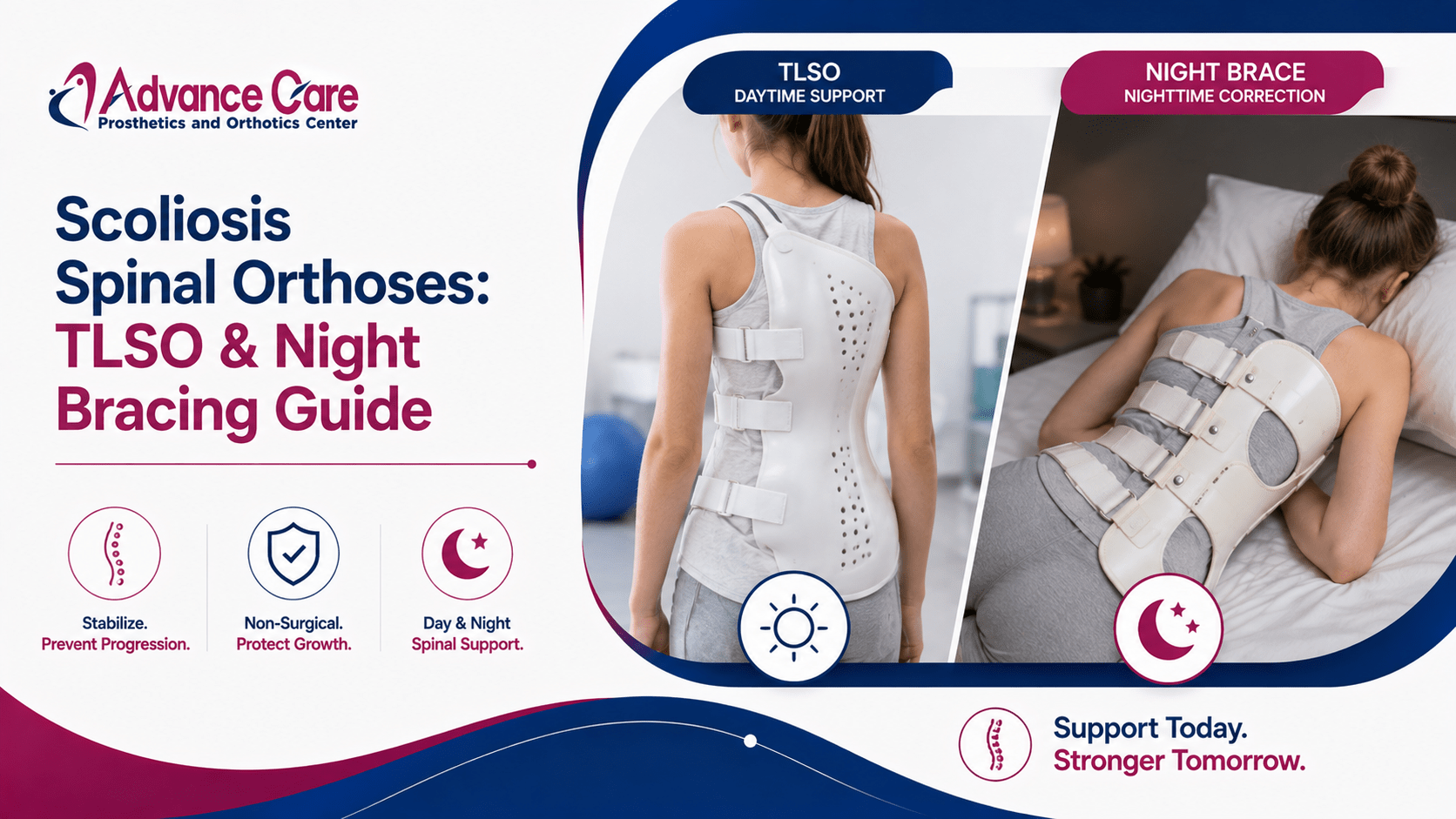
Adolescent Idiopathic Scoliosis (AIS) is a complex, three-dimensional structural deformity of the spine that develops in otherwise healthy children during the rapid growth spurts of puberty. Characterized by an abnormal lateral curvature and rotational twisting of the vertebrae, scoliosis can progress rapidly if left unmanaged while the skeleton is growing. When a spinal curve reaches a critical threshold measured clinically by a Cobb angle between twenty and forty degrees—implementing specialized scoliosis spinal orthoses becomes the gold standard for conservative management. Modern spinal orthotics focuses on two main treatment styles: a daytime Thoraco-Lumbo-Sacral Orthosis (TLSO) body jacket, which applies steady, corrective holding forces throughout the day, and an unbending Charleston night brace, which introduces a powerful corrective curve while the adolescent sleeps. Both options provide critical structural control designed to stabilize the spine, halt curve progression, and safely avoid the need for complex spinal fusion surgery.
The Biomechanics of Spinal Deformity Correction
Correcting a three-dimensional spinal curve requires moving away from basic, uniform compression toward highly strategic, opposing mechanical forces that guide skeletal development.
To fabricate an effective brace, an orthotist captures a detailed 3D digital scan of the adolescent’s torso. Advanced software is then used to design a rigid copolymer plastic shell that fits snugly around the body. The brace applies a sophisticated three-point pressure system, utilizing built-in pads to press gently against the prominent apex of the spinal curve. Crucially, the orthotist creates open relief spaces or voids directly opposite these pressure zones. As the adolescent stands and breathes, the spine naturally expands into these open pathways, unraveling the curve and guiding the vertebrae into a straighter alignment.
Comparing Treatment Protocols: TLSO vs. Charleston Night Bracing
Selecting the optimal spinal orthosis depends on the specific shape of the spinal curve, the child’s skeletal maturity, and their daily lifestyle needs.
| Orthosis Classification | Prescribed Wear Timeline | Primary Biomechanical Correction Strategy |
| TLSO Body Jacket | Full-time wear: 16 to 23 hours a day during all school and daily activities. | Symmetric holding forces; maintains a balanced, aligned spine during weight-bearing hours. |
| Charleston Night Brace | Nocturnal wear only: 8 to 10 hours during sleep. | Unbending over-correction; applies a powerful sideways push that would be impossible to walk with. |
The Critical Clinical Timing Window
The success of any spinal bracing treatment depends entirely on timing the intervention to match the child’s remaining skeletal growth windows.
- Tracking the Risser Sign: Clinicians review X-rays of the pelvic bone to determine the Risser sign—a grade from zero to five that measures skeletal maturity. Bracing is highly effective for grades zero to two, when the skeleton is still growing rapidly.
- Proactive Cobb Angle Monitoring: Regular spinal X-rays every four to six months allow the orthopedic team to track the curve’s Cobb angle, ensuring the brace is successfully stabilizing the deformity.
- Weaning Off the Brace Safely: Once the adolescent reaches skeletal maturity (typically Risser grade four or five in girls), the wear schedule is gradually reduced over several months, allowing the back muscles to strengthen safely.
Comprehensive Adaptation and Compliance Frameworks
Adapting to a rigid spinal orthosis can be a significant emotional and physical adjustment for an adolescent, requiring dedicated support from family and clinicians.
- Gradual Wear Break-In Schedule: Patients follow a structured two-week timeline, starting with just two hours a day and gradually increasing wear time to allow the skin and muscles to adapt safely to the brace.
- Diligence in Skin Care Hygiene: To prevent skin breakdown or irritation beneath the rigid plastic, adolescents must always wear a tight-fitting, seamless, moisture-wicking cotton undershirt beneath the brace.
- Targeted Core Physical Therapy: Participating in specialized scoliosis exercises (such as the Schroth method) alongside brace wear helps strengthen the core and back muscles, maintaining posture and flexibility.
Frequently Asked Questions
Does wearing a scoliosis spinal orthosis permanently cure or completely straighten a curved spine?
The primary goal of spinal bracing is to stabilize the spine and stop the curve from worsening during rapid growth spurts, rather than permanently straightening the bones. However, many adolescents experience a permanent, moderate improvement in their final Cobb angle.
Can an adolescent participate in competitive sports while undergoing scoliosis brace therapy?
Absolutely. Adolescents are encouraged to remain highly active. The rigid brace can be safely unbuckled and removed for one to two hours a day to allow for sports, swimming, or physical education classes, then put back on immediately afterward.
What is the main clinical difference between a daytime TLSO brace and a Charleston night brace?
A TLSO brace holds the spine in a straight, balanced alignment while the patient is standing and moving during the day. A Charleston night brace works only while lying down, applying a powerful sideways bend that over-corrects the curve by utilizing night-time growth spurts.
How do I know if my teenager’s spinal brace has become too small or needs to be replaced?
Signs that a brace has been outgrown include the waist groove of the plastic no longer aligning with the child’s hips, the top edges pinching the armpits or thighs painfully, or skin redness that takes longer than half an hour to fade.
What happens if an adolescent refuses to wear their prescribed scoliosis brace for the required hours?
Scoliosis bracing exhibits a direct relationship between wear compliance and treatment success. If a brace is not worn consistently for the prescribed hours, the spinal curve can progress rapidly during growth spurts, significantly increasing the likelihood of requiring complex spinal surgery.
Conclusion
Successfully managing adolescent idiopathic scoliosis requires early detection, expert biomechanical engineering, and consistent support for the young patient. Implementing specialized scoliosis spinal orthoses offers a highly effective, non-surgical pathway for controlling curve progression, protecting skeletal health, and avoiding complex spinal fusions. Whether utilizing a full-time TLSO body jacket to secure posture during school hours or an innovative night brace to apply corrective forces during sleep, these precision devices guide your teenager’s growth safely. Work closely with an experienced team of pediatric orthopedic physicians, physical therapists, and certified orthotists to ensure an accurate fit and a supportive journey toward a straight, healthy, and independent future.