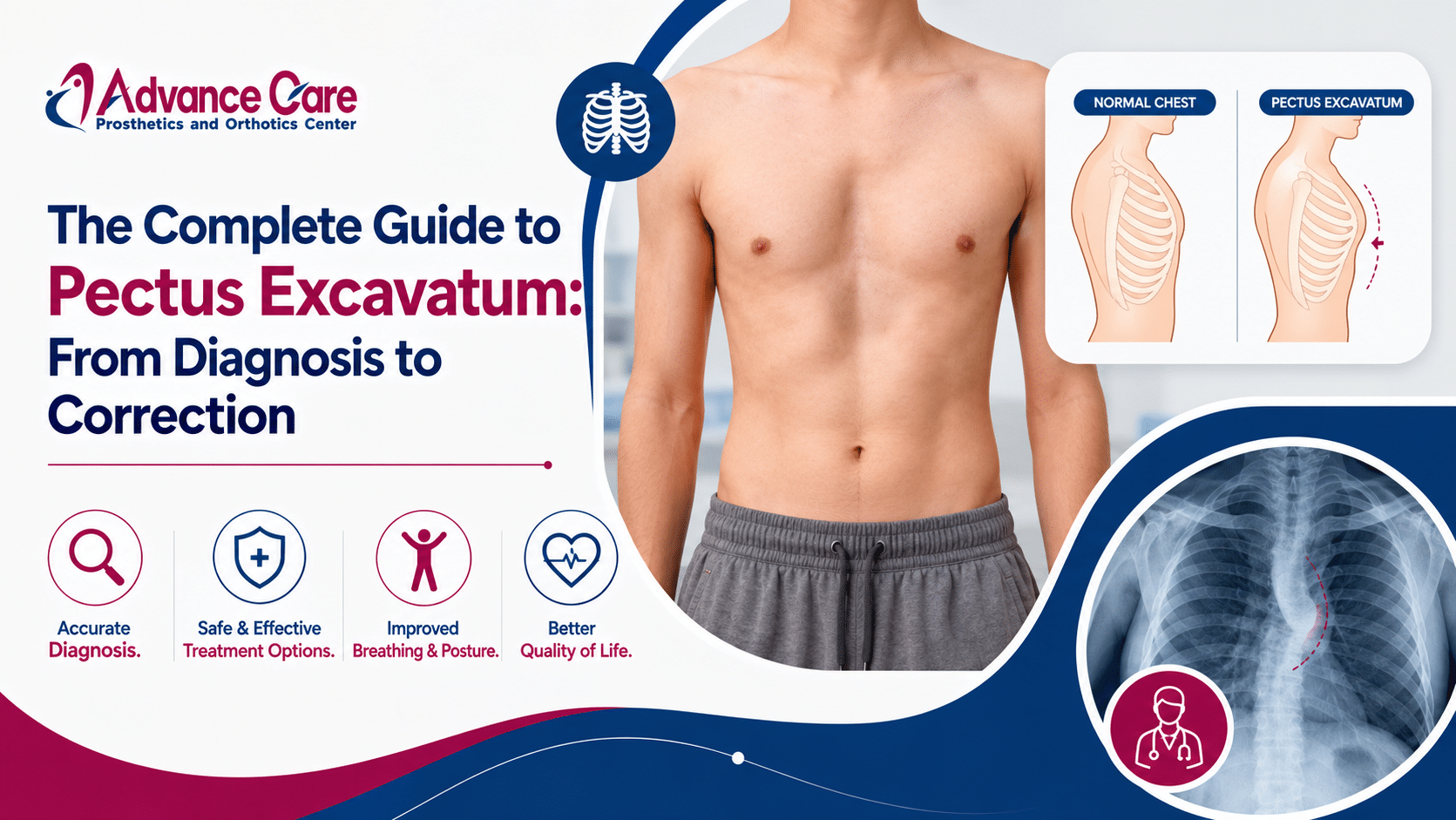
Pectus excavatum, from the Latin for hollowed chest, is a congenital structural deformity of the chest wall. Abnormal inward growth of the breastbone and four to five rib cartilages per side creates a distinct, concave depression, often described as a sunken chest.
What Causes Pectus Excavatum?
While this condition can be present from birth, it often becomes far more noticeable during rapid teenage growth. Pectus excavatum occurs when the flexible costal cartilage linking the ribs to the sternum grows excessively, drawing the lower sternum inward toward the spine instead of allowing the rib cage to expand naturally outward.
Key factors:
- Genetics
- Connective Tissue Disorders: Pectus excavatum is frequently associated with conditions like Marfan syndrome, Ehlers-Danlos syndrome, and Poland syndrome.
- Growth Spurt Acceleration
Key Symptoms and Physical Impacts of Pectus Excavatum
Mild pectus excavatum is primarily a cosmetic issue, but severe cases, where the breastbone is deeply sunken or twisted, can compress the heart and lungs. This can cause measurable physical impairment as well as significant psychological stress.
Physical Symptoms
- Shortness of breath
- Decreased stamina
- Chest tightness or palpitations caused by the sternum pressing against the heart
- Frequent respiratory infections
- Poor posture
Psychological and Emotional Impact
The visible chest indentation often causes deep body insecurity and self-consciousness, particularly in adolescents and young adults. To avoid exposure in places like swimming pools or locker rooms, patients frequently withdraw socially, which can lead to heightened anxiety, lowered self-esteem, and feelings of isolation.
How Is Pectus Excavatum Diagnosed?
A doctor typically identifies pectus excavatum during a routine physical exam, but diagnostic tests are required to measure severity and evaluate heart and lung function:
- CT or MRI Scan
- Echocardiogram (Echo)
- Pulmonary Function Tests (PFTs)
- Electrocardiogram (ECG)
Pectus Excavatum Treatment Options: From Non-Surgical to Surgery
Treatment depends on the severity of the depression, age, and whether heart or lung function is compromised.
1. Non-Surgical Approaches
Physical Therapy and Exercise: Targeted training focusing on chest expansion, posture correction, and core strength.
Vacuum Bell Therapy: Vacuum bell therapy is a non-surgical treatment for pectus excavatum that uses a flexible, bowl-shaped suction cup placed over the chest. Attached to a small hand pump, the device creates a vacuum suction that physically pulls the sunken breastbone forward.
When worn regularly, typically for 3 to 4 hours daily over several months or years, it gradually reshapes the flexible chest cartilage over time. It is most effective in younger patients whose chest walls are still growing and pliable.
2. Surgical Solutions
When the Haller Index exceeds 3.25 or symptoms impair daily quality of life, surgical correction is often recommended:
- Nuss Procedure (Minimally Invasive)
- Ravitch Procedure (Open Surgery)
Conclusion
Pectus excavatum impacts both physical health and self-image, with severe cases compressing the heart and lungs while causing emotional distress. Modern non-surgical and surgical treatments effectively restore organ function, chest appearance, and patient confidence. Call to action (optional, edit as needed): If you or your child has a sunken chest or symptoms of pectus excavatum, contact Advance Care Prosthetics and Orthotics Center to book an assessment.